How to Celebrate Samhain Simply: One Candle, One Name, One Meaningful Moment
Quick answer: You don’t need an elaborate altar, a full circle or a long list of tools to celebrate Samhain. A simple Samhain ritual can be as small as lighting one candle, saying the name of someone who came before you, and sitting with that memory for a few minutes. What makes Samhain meaningful is your presence, not the size of your ritual.
Every year around this time, a quiet question surfaces for many witches: Am I doing enough for Samhain?
Perhaps you’ve been practicing for years and your celebration still feels thin next to the elaborate altars, layered rituals and ancestor offerings you see everywhere. Or perhaps you’re brand new, looking at a long list of tools and steps and wondering whether you need a circle, an altar, a script or a family tree before you’re allowed to begin.
Somewhere along the way, a turning point in the year becomes one more thing to get right.
After more than 35 years on the witchcraft and Wiccan path, here is what I’ve come to believe: you don’t need thirteen things. You need one meaningful moment.
In this article:
- What Samhain is and how to pronounce it
- Why Samhain isn’t a performance
- What ancestor work can include
- Five simple ways to celebrate Samhain
- Common questions about Samhain
- Where to go next
What Is Samhain?
Samhain is one of the eight Sabbats on the Wheel of the Year, and one of its great turning points. It marks the shift from the lighter, more outward half of the year into the darker, more inward half.
Traditionally, the veil between the worlds is considered thin at this time. That’s why Samhain is so closely connected with remembering ancestors, with death and endings, and with transformation. It’s a season for looking at what you want to let go of.
How Do You Pronounce Samhain?
Samhain is spelled S-A-M-H-A-I-N. The pronunciation most commonly used in modern English is SAH-win. You’ll hear other pronunciations depending on where you are and who you learned from, and that’s normal.
When Is Samhain?
In the Northern Hemisphere, Samhain is celebrated at the end of October into early November. In the Southern Hemisphere, where I live in Australia, the wheel turns the other way, so while the north celebrates Samhain, we celebrate Beltane.
Beltane is also a threshold time when the veils are considered thin, but its energy is the opposite of Samhain’s: life, fertility, making things and expanding them. Samhain draws us inward. Beltane draws us outward.
Both are thresholds. And a threshold asks something different of us than a performance does.
Do You Need a Full Ritual to Celebrate Samhain?
No. A full ritual is a lovely option, but it isn’t a requirement.
When we’re beginning, it’s natural to look at what other witches are doing and assume that’s what a “real witch” does. I did exactly that. When I first started, I believed I needed a full circle and a full ritual for every Sabbat. That’s what we did in the coven, and it was how I learned witches marked the turning of the year. I wanted to do it properly.
There’s nothing wrong with a full ritual. I still love ritual, and when I can, I still do one. A complete circle, with sacred space created and the deities invited in, is a beautiful way to mark the wheel.
But over the years I noticed how easy it is to start measuring your spirituality by what you can tick off:
- Did I cast a circle?
- Did I light the candles?
- Did I make an offering?
- Did I meditate?
- Did I honor the ancestors?
- Did I do enough?
Asked often enough, those questions turn something meant to connect you to the season and to yourself into an exam.
Why Samhain Is a Relationship, Not a Performance
Samhain isn’t a performance, and none of the Sabbats are. They are relationships: with the turning of the wheel, with your own practice, with those who came before you, and with any deities you work with.
Relationships don’t deepen because you fit more activities into one evening. Sometimes doing less allows you to be more present.
Life also gets in the way. You move house. You’re exhausted. Some seasons you have the time and energy to create something beautiful, and some seasons you don’t.
What I learned is that a Sabbat doesn’t become less meaningful because the ritual was smaller. There have been times when, instead of casting a formal circle, I simply went to the seaside, sat on a rock, meditated and sang to honor the season. Those moments were deeply powerful for me. I had no perfect altar and no thirteen-step ritual. I was simply there, paying attention to the season and marking its turning in a way that meant something to me.
Candles, altars and tools can support a practice, but they aren’t the practice itself. The practice is presence.
What Is Ancestor Work at Samhain?
Because Samhain is so connected with ancestors, it’s worth saying what ancestor work can be.
At its simplest, ancestor work at Samhain means taking time to remember and acknowledge the people who came before you. But it can also go further. For me, a big part of it is release work. I use a shamanic tapping practice to work with ancestral shadow beliefs: the patterns, beliefs and ways of responding to the world that can be carried through families. So my ancestor practice isn’t only about honoring the people who came before me. It’s also about asking, What am I carrying that doesn’t need to continue through me?
Some of those beliefs and behaviors very much need to stop.
Around Samhain I also spend time with my own ancestors, particularly my grandparents, whom I knew. That’s what makes it personal. It isn’t an abstract idea of “working with ancestors.” It’s remembering actual people whose lives shaped mine, for better or for worse, and making a little space to acknowledge them.
If your family history is complicated, you don’t have to pretend otherwise. You don’t have to honor harmful behavior, and you don’t have to romanticize anyone. You can simply acknowledge that these people existed and that, through a long chain of lives, you are here.
5 Simple Ways to Celebrate Samhain
None of these requires special tools, experience or a particular belief about what will happen.
1. Light One Candle and Remember One Person
What to do: Take any candle. Red or orange both suit Samhain well, black is traditional, and it doesn’t have to be expensive. If you can light it safely, do so and let yourself settle. Think of someone who has gone before you: a grandparent, a parent, a relative you knew. If you have a photograph, keep it nearby. Say their name if you know it. You might say, “I remember you,” or “Thank you for what you gave me,” or something more personal.
Why it matters: This turns an abstract idea into a real relationship with a real person.
What you might notice: Perhaps grief, warmth, gratitude, or nothing in particular. All of it is fine.
A caution: You don’t need to feel a presence, see anything or have an experience. Sitting quietly and remembering is the practice.
2. Leave a Simple Offering
What to do: Place something beside the candle: seasonal food, a drink, wine, flowers, or something that reminds you of the person you’re remembering.
Why it matters: An offering is a way of saying you are not forgotten through something you can touch.
A note on water: A glass of water is a perfectly good Samhain offering. Water sustains life on this planet and carries a life-giving energy of its own. It may look like “just water,” but it’s a meaningful gift.
3. Honor Your Ancestors Even If You Don’t Know Who They Were
What to do: You don’t need a complete family tree, photographs, or names going back generations. You can say, “I honor those who came before me, known and unknown.” Then stop.
Why it matters: The practice is acknowledgment, and it doesn’t depend on knowing names.
A caution: Don’t manufacture a spiritual experience to prove it worked. Sometimes the whole practice is an act of remembering.
4. Look at Both Sides of Your Inheritance
What to do: Sit quietly for a few minutes and feel into your family line, for better and for worse. If your relationship with your ancestors is warm, think about the joys and good things you’ve inherited. If parts of it are painful, consider what patterns, beliefs or ways of seeing the world you’re ready to stop passing on. You can simply say, “I’m stopping this now.”
Why it matters: Even the difficult parts of an ancestral line can be transformed. Remembering well includes deciding what ends with you.
What you might notice: Relief, sadness or resolve. Take as long as you like.
5. Match Your Samhain Practice to the Time You Have
What to do: Let your real life set the size of the ritual.
- Five minutes: light a candle and remember someone.
- Twenty minutes: sit quietly and meditate.
- An hour: create a full ritual with a circle, if you love that.
- If you can get somewhere meaningful, especially in nature, simply spend time there.
Why it matters: A practice you can actually sustain is worth more than an ideal one you dread.
A caution: This isn’t an argument against ritual. If you love a full ritual, do it. You don’t have to prove you’re a witch by how much you do.
Can You Celebrate Samhain With a Deity Instead of Ancestors?
Yes. If you’d rather work with a deity than with ancestors, that’s equally valid. I love working with Hecate at Samhain. One candle and one moment of connection with the deity you love can be enough.
A Shift in Perspective
Samhain is a threshold, and when you’re standing at a threshold you don’t have to do something spectacular.
Sometimes you simply stop. You notice that you’re here. You acknowledge what you’re leaving behind. You remember what came before you. Then you turn toward what comes next.
That’s witchcraft too.
So this year, instead of asking What else do I need to do for Samhain?, you might ask a gentler question: “What would help me actually connect with this moment?”
You don’t have to do more for Samhain to have it mean more. Witchcraft isn’t measured by how much you do. It’s measured by how deeply you feel it, how it changes you, and how present you are. Sometimes the simplest ritual is the one that lets you truly connect and be transformed.
Samhain FAQ
What do you actually need to celebrate Samhain?
Nothing more than a willingness to pause and pay attention. A candle and a moment of remembrance are enough. Altars, circles and tools can support your practice, but they aren’t the practice itself.
What is a simple Samhain ritual for beginners?
Light a candle, think of someone who came before you, say their name, and tell them something true: “I remember you,” or “Thank you for what you gave me.” Add an offering such as water, food or flowers if you like, sit for a few minutes, then snuff out the candle.
What colors of candle are used for Samhain?
Orange and red both work well, and black is also traditional. Any candle is fine. It doesn’t need to be expensive.
What can you offer ancestors at Samhain?
Seasonal food, a drink, wine, flowers, or something that reminds you of the person you’re remembering. A glass of water is also a meaningful offering.
What if I don’t know who my ancestors are?
You don’t need a family tree or any names. You can say, “I honor those who came before me, known and unknown.” The practice is simply an act of remembering.
What if my relationship with my family is complicated?
You don’t have to honor harmful behavior or romanticize your family history. You can acknowledge that these people existed and that, through a long chain of lives, you are here. Ancestor work can also be about deciding which patterns and beliefs end with you.
What if I don’t feel anything during a Samhain ritual?
That’s fine. You don’t need to feel a presence, see anything or have an experience. Sometimes the practice is simply remembering.
Can I celebrate Samhain without casting a circle?
Yes. A full circle is a lovely option if you have the time and energy, but a Sabbat doesn’t become less meaningful because the ritual was smaller.
How do you pronounce Samhain?
Most commonly SAH-win in modern English, though you’ll hear other pronunciations.
Is Samhain celebrated at the same time everywhere?
No. Because the seasons are reversed, Southern Hemisphere witches celebrate Beltane while the Northern Hemisphere celebrates Samhain.
Where to Go From Here
If you’ve been saving rituals and collecting information but still wonder how to build a practice that is truly yours, and what to do first, I’ve created a free masterclass called Start Your Witchcraft Practice Without Overwhelm. It shows you what you need in order to begin, and just as importantly, what you don’t need, so you can start without feeling you have to learn or do everything at once.
Blessed be,
Sandra
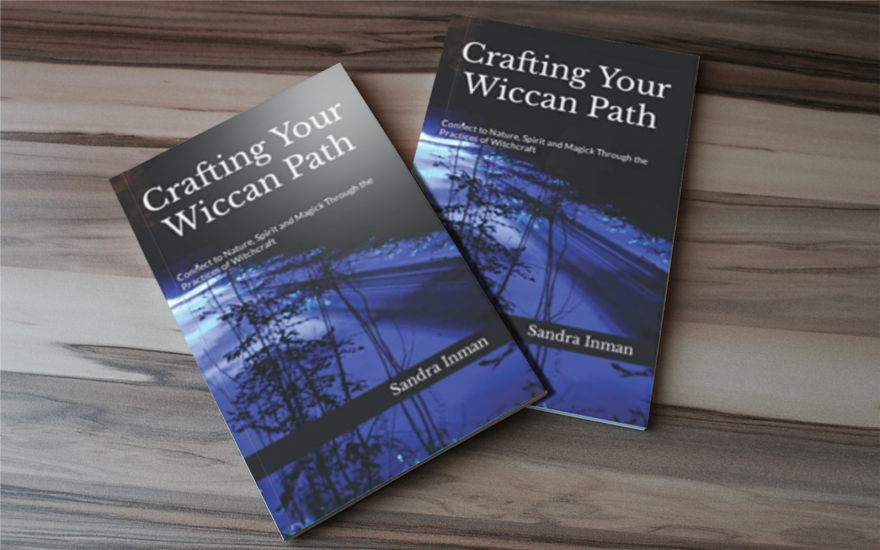
Sandra is the author of Crafting Your Wiccan Path and the founder of Mystery Witch School. She has walked the witchcraft and Wiccan path for over 35 years and teaches practical witchcraft and shadow work.
Magick is real, and you have the power to use it.
If you want to find out how to start your witchcraft practice watch Start Your Witchcraft Practice Without Overwhelm
This FREE Class shows you exactly where to start learning and what you need to do to practice modern witchcraft easily and safely.
- Discover exactly what you need to learn to become a successful witch
- Uncover the exact steps you need to take to build your natural magickal gifts
- Overcome failure by knowing what you need to learn and when to learn it
- Confidently develop a practice that will connect you to your higher self, nature and the Goddess and God
- Become one of the few witches who maintain a consistent and fulfilling practice
Join me on Social Media




--- Crafting Your Wiccan Path ----
Connect to Nature, Spirit and Magick Through the Practises of Witchcraft
How to Celebrate Samhain Simply: One Candle, One Name, One Meaningful Moment
Why Shadow Work Isn't Working (And What to Do About It)
How to Start a Witchcraft Practice Without Feeling Overwhelmed
Why Embodiment Feels So Much Harder Than Shadow Work (And How Hekate Helps You Cross the Threshold)
Why You Don't Trust Your Own Magic (Even Though You Already Know More Than You Think)
Daily Witchcraft Practice: A Simple Rhythm That Sticks
Shadow Work Isn't Enough on Its Own: Why Understanding Your Wound Doesn't Heal It
Standing at the Crossroads: What Hekate Teaches Us About Feeling Stuck
Identity Shifting in Witchcraft: Why Your Magic Feels Capped (Even When Your Practice Is Solid)
When the Ritual Ends and Nothing Feels Different
The Witch Identity Gap: Why You Might Feel Like You're Still Waiting to Feel Like a "Real" Witch
The Shadow Work Trap: Why Understanding Yourself Isn’t Always Enough to Transform
The Witch Wound: Why You Keep Doubting Your Own Magic
7 Reasons Your Witchcraft Practice Feels Stuck (And How to Move Forward)
How to Build a Daily Devotional Practice with Hecate
Full Moon Ritual: How to Make the Magic Last
The Witch Wound: Why You Keep Pulling Away From Your Practice
Five Mistakes That Keep Beginner Witches Stuck (And What to Do Instead)
When Shadow Work Becomes a Place You Live Instead of a Place You Pass Through
The First Seven Days of Witchcraft: Beginning Without Overwhelm
When Witchcraft Feels Confusing and Disconnected — And How to Finally Find Your Path
The Wound That Lives in Your Body: How to Release the Fear of Being Seen and Reclaim Your Power
Hekate’s Call: 3 Signs You’re Being Pulled Into Shadow Work
Why Your Spells Aren’t Working (It’s Not What You Think)
How to Close the Identity Gap in Witchcraft and Truly Feel Like a Real Witch
The Witch Who Was Taught Not to Want
Standing at the Crossroads: A Gentle Introduction to Shadow Work with Hekate
The Shadow Box: A Witch’s Tool for Making Peace With Your Inner Work
The Wagon Hasn’t Gone Anywhere: A Letter to the Inconsistent Witch
When Hekate Reaches Out: How to Know If a Sign Is Real
Hecate Isn’t Here to Save You From the Dark — She’s Here to Light Your Way Through It
A Daily Sigil Practice That Actually Fits Into Your Life
3 Simple Imbolc Rituals I Use to Celebrate the Return of Light
The Essential Witchcraft Tools You Actually Need (And How to Get Them Cheap)
Answer Hecate's Call: Begin Your Transformational Journey
5 Morning Rituals for a Magical Start to Your Day
My 3 Witchy Goals for an Empowering 2026
Which Witch Are You? Discover Your Perfect Magical Path
Simple Solstice Rituals: Embrace the Magic of the Seasons
Simple Solstice Rituals: Embrace the Magic of the Seasons
How Your Identity Shapes Your Magic: Becoming the Witch Who Makes Spells Work
Unlock Your True Self with Hekate and Tarot
3 Ways Hekate Can Help You Step Into Your Authentic Self
Break Free: Simple Spell to Reclaim Your Power
Samhain Ritual: Healing Ancestral Trauma with Hecate
Step Into Your Power: How to Make a Confidence Spell Jar for Witches
Awaken Your Inner Witch: A Spell for Self-Empowerment
5 Secret Practices to Reignite Your Witch Power
Unblock Your Energy with This Transformative Tarot Spell
Releasing Ancestral Blocks with Hecate's Transformative Power
Harnessing the Power of Candle Magic: A Beginner's Guide
Simple Equinox Rituals for Balance and Renewal
How to Bind Toxic People: A Simple Spell for Protection
Embrace Transformation with Hekate's Crossroads Ritual
3 Simple Witch Habits to Reignite Your Magick and Purpose
Still Feel Unsafe? Try This Daily Protection Spell
Why Your Love Spells Are Failing and How to Fix Them
Ignite Your Inner Magic: Simple Imbolc and Lughnasadh Rituals with Brigid and Lugh
Witch Bottle for Self Transformation Guided by Hekate
Clear Negative Energy with Selenite: A Daily Ritual for Renewal
Craft Your Own Prosperity Spell Box with Otter Spirit
Ground Your Heart and Nurture Your Soul: A July Spell for Balance and Strength
5 Simple Spells I Use to Relieve Stress & Find Inner Calm
How to Charge a Love Bracelet Crystal for Attraction & Healing
Celebrate Solstice: Easy Rituals for Yule & Litha
3 Full Moon Spells to Manifest Magic and Transform Your Life
5 Simple Daily Witchcraft Rituals to Reconnect With Your Craft
Connecting with Intuition Using Tarot
Shadow Work for Witches Made Simple
Quick Full Moon Ritual for Manifestation (No Tools Needed)
Beginner Witch Mistakes: 3 Things I Wish I Knew Sooner
5 Simple Witchcraft Practices for Beginners
Unlock Your Power: Break Through Energy Blocks with Hecate’s Guidance
7 Deities to Empower Your Witchcraft in 2025
